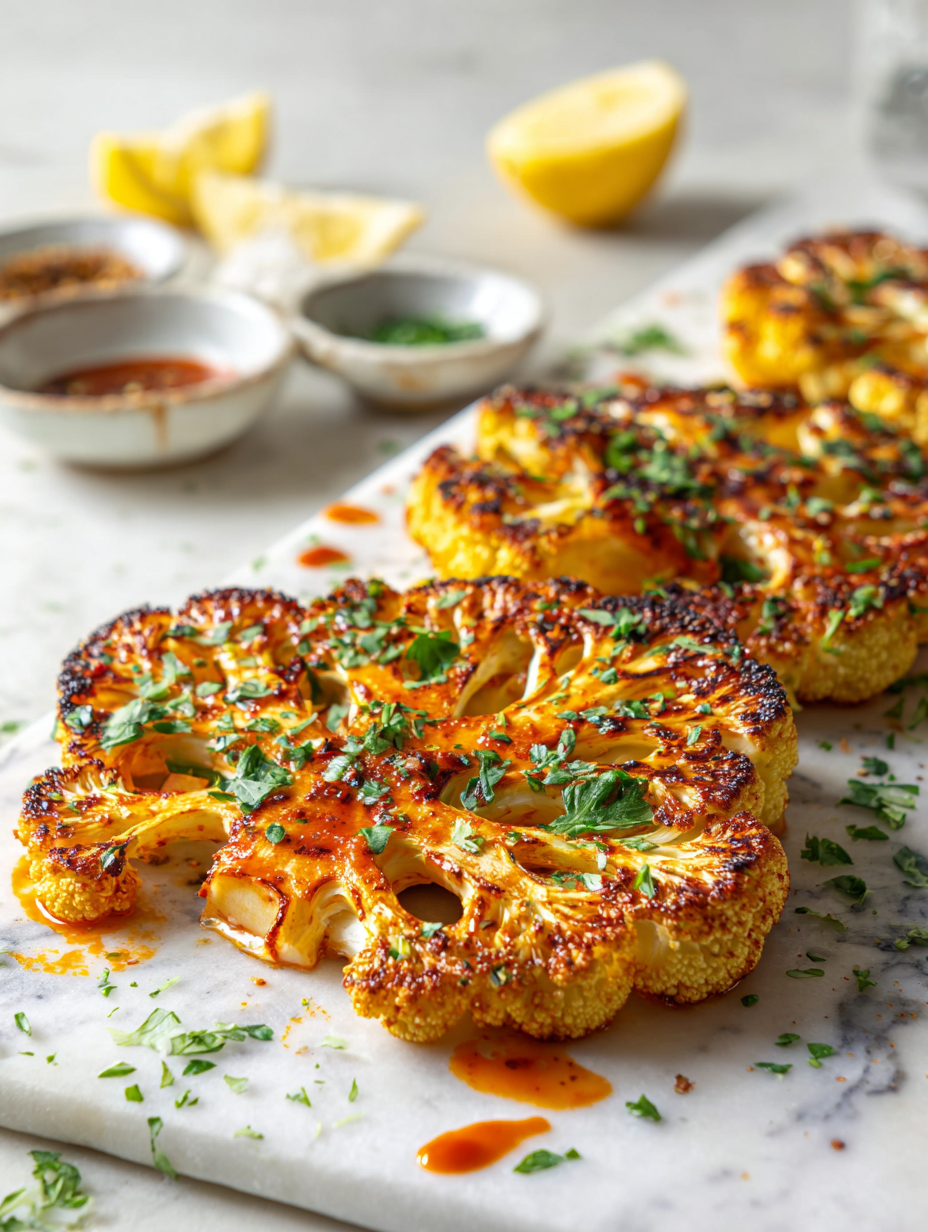
Cauliflower steaks are a surprisingly dramatic way to serve this humble vegetable. Instead of chopping it into florets, you slice it into thick, hearty slabs that can hit the grill or pan with a satisfying sizzle. What I love about this method is how it transforms cauliflower into a smoky, caramelized centerpiece—perfect for veggie skeptics or those wanting something a little more special.
It’s not just about the looks, though—these steaks pick up a beautiful char and smoky aroma that makes even non-veggies pause. I’ve found that a good sear really unlocks cauliflower’s hidden depth, giving it a smoky, almost meaty quality without any meat at all. It’s a way to elevate a simple veggie into something that feels both rustic and refined, all in one pan.
Focusing on how cauliflower steaks can be transformed into a smoky, charred centerpiece using a simple homemade grill pan setup, emphasizing the beauty of caramelization and the versatility of cauliflower beyond just roasted or steamed.
Transforming cauliflower into a stunning, smoky centerpiece is my go-to move when I want to impress without much fuss. These steaks remind me of summer barbecues, but they’re just as at home in the winter oven, filling the kitchen with a warm, roasted aroma. It’s a simple way to make a humble vegetable feel special—no fancy tricks, just good, honest cooking.
- I remember the first time I grilled cauliflower steaks outdoors; the smoky aroma took me right back to childhood barbecues, but with a veggie twist.
- Using cauliflower this way feels like reclaiming a humble vegetable and turning it into something worthy of a special dinner table, even if it’s just for myself.
- There’s a quiet pride in slicing thick, watching the edges crisp up to a perfect golden-brown—like tiny edible trophies.
- Sometimes I get frustrated when they stick or don’t sear evenly, but those moments make the perfect excuse to experiment with different spices or pan temps.
- Serving these steaks reminds me that good food doesn’t need to be complicated—just honest, well-cooked, and a little bit smoky.
A Little Inspiration from the Kitchen
- Transforming cauliflower into steaks started as a way to make the vegetable more substantial, more like a real dish. I was tired of the usual roasted florets, craving something with a bit more presence and bite. One night, I sliced a head into thick slabs and threw them on a hot cast iron skillet, amazed at how the edges caramelized and charred beautifully.
- That simple act of slicing and searing changed how I see cauliflower. It’s become my go-to for when I want a veggie that feels hearty and impressive without much fuss. Every time I cook these steaks, I remember how just a little heat and patience can turn something humble into a smoky, satisfying centerpiece.
- heading
- story_type
Contextual origin, trivia, or history
- Cauliflower steaks gained popularity in the early 2010s as part of the plant-based eating movement, emphasizing whole vegetable presentations.
- The technique of slicing vegetables into ‘steaks’ has roots in French cuisine, where thick slices of eggplant or zucchini are grilled or roasted.
- Cauliflower’s versatility as a canvas for flavors and textures has made it a favorite in modern culinary experiments, especially for creating ‘meaty’ plant dishes.
- Historically, cauliflower has been cultivated since ancient times, with origins traced back to the Mediterranean region, where it was prized for its delicate flavor.
- The visual appeal of cauliflower steaks aligns with contemporary food styling trends, turning humble vegetables into photogenic main courses.
Ingredient breakdown
- Cauliflower: I love how a good cauliflower head offers a mild, nutty aroma that intensifies when grilled or roasted—swap for Romanesco if you want a visual kick.
- Olive oil: I use a fruity, peppery extra virgin because it adds a smoky richness; for a lighter touch, try avocado oil, but it won’t develop quite the same deep flavor.
- Salt: I prefer flaky sea salt—its crunch and mineral tang really wake up the cauliflower’s flavor; table salt can be too sharp, so adjust your measure accordingly.
- Black pepper: Freshly cracked pepper adds a sharp, spicy bite—don’t skip it, but if you want a milder profile, go easy or replace with smoked paprika for smoky depth.
- Lemon juice: A splash brightens everything—when I squeeze lemon over hot steaks, it’s like awakening the flavors with zesty, oozy brightness; try lime for a different citrus zing.
- Herbs & spices: I often sprinkle with smoked paprika or cumin—these add warmth and depth, but you can experiment with thyme or coriander for fresh herbal notes.
- Optional toppings: A drizzle of tahini or a sprinkle of toasted nuts can add creaminess and crunch—swap for vegan cheese or gremolata if you prefer a different accent.
Spotlight on 1–2 key ingredients
Cauliflower:
- I love how a good cauliflower head offers a mild, nutty aroma that intensifies when grilled or roasted—swap for Romanesco if you want a visual kick.
- Olive oil: I use a fruity, peppery extra virgin because it adds a smoky richness; for a lighter touch, try avocado oil, but it won’t develop quite the same deep flavor.
Salt & Pepper:
- Salt: I prefer flaky sea salt—its crunch and mineral tang really wake up the cauliflower’s flavor; table salt can be too sharp, so adjust your measure accordingly.
- Black pepper: Freshly cracked pepper adds a sharp, spicy bite—don’t skip it, but if you want a milder profile, go easy or replace with smoked paprika for smoky depth.
Notes for ingredient swaps
- Dairy-Free: Olive oil works perfectly, but if you want a richer flavor, try toasted sesame oil—just use a little, as it’s potent.
- Vegetarian/Vegan Cheese: Nutritional yeast adds cheesy umami—skip cheese altogether for a nutty, savory boost without dairy.
- Herb Options: Fresh thyme or rosemary can replace dried herbs—use sparingly, as they can overpower the delicate cauliflower flavor.
- Citrus: Lemon juice brightens the dish; lime or even a splash of orange juice can add different zesty notes.
- Spice Variations: Smoked paprika gives a smoky kick; cumin adds earthiness—swap based on your spice mood.
- Oil Choices: Avocado oil for a neutral, high-smoke point option; coconut oil for a hint of sweetness—keep in mind the subtle flavor change.
- Salt: Fine sea salt is fine, but flaky sea salt adds crunch and mineral depth—adjust quantity for your taste.
Equipment & Tools
- Chef’s Knife: For slicing the cauliflower into steaks and prepping ingredients.
- Cutting Board: Provides a stable surface for slicing.
- Skillet or Grill Pan: To sear and char the cauliflower steaks, creating smoky flavor.
- Brush: To evenly coat the steaks with oil and seasonings.
Unique Guide to Perfect Cauliflower Steaks
- Equipment & Tools: Gather a sharp chef’s knife, a sturdy cutting board, a heavy skillet or grill pan, and a brush for oil.
- Prepping the Cauliflower: Remove the leaves and trim the stem end. Place the cauliflower on the cutting board.
- Slicing into Steaks: Cut the cauliflower into 1-inch thick slices, aiming for 2-3 steaks depending on size. Keep the core intact to hold the slices together.
- Preparing for Cooking: Brush both sides of the steaks generously with olive oil, season with salt, pepper, and your choice of spices. Let sit for 5 minutes.
- Heating the Pan: Place your skillet or grill pan over medium-high heat (about 200°C / 390°F). Let it heat until shimmering and slightly smoking.
- Cooking the Steaks: Lay the cauliflower steaks in the hot pan. Cook for 4-5 minutes until the underside is golden and charred. Flip carefully.
- Finishing the First Side: Cook the second side for another 4-5 minutes, until it develops a deep caramel color and feels firm but tender when pressed.
- Check for Doneness: The steaks should be tender but hold their shape. If they’re too soft or falling apart, reduce heat and cook a bit longer.
- Final Sear & Rest: For extra char, briefly press the steaks down or flip again for a quick 2-minute sear. Remove from heat and rest for 2 minutes on a warm plate.
- Serving: Drizzle with lemon juice or herbs, then serve hot, showcasing the smoky, crispy edges.
Let the steaks rest for 2 minutes after cooking. Serve drizzled with lemon juice or herbs for brightness and contrast.
How to Know It’s Done
- Color: Deep golden brown and charred edges indicate good caramelization.
- Texture: Firm but tender when pressed, not mushy or falling apart.
- Appearance: Even sear marks and a slight shimmer of oil on the surface.
Smoky Cauliflower Steaks
Ingredients
Equipment
Method
- Remove the leaves from the cauliflower and trim the stem end so it can sit flat on your cutting board.
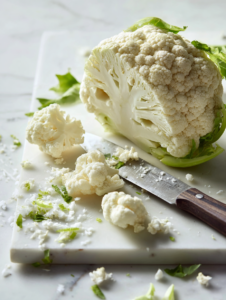
- Place the cauliflower on the cutting board and slice it into 1-inch thick steaks, aiming for 2-3 slices depending on the size of the head. Keep the core intact to help hold the slices together.
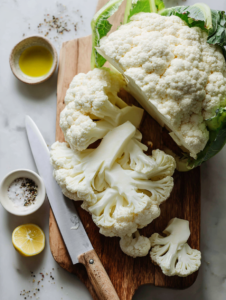
- Brush both sides of each cauliflower steak generously with olive oil, ensuring an even coating that will promote caramelization and prevent sticking.
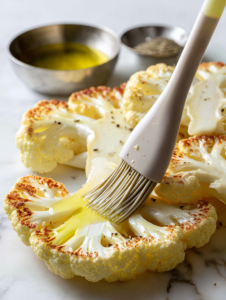
- Sprinkle salt, freshly cracked black pepper, and smoked paprika over both sides of the steaks. Let them sit for about 5 minutes to absorb the flavors.
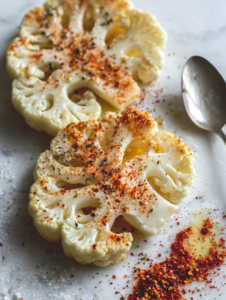
- Heat your skillet or grill pan over medium-high heat until it’s shimmering and just starting to smoke—this creates the perfect sear environment.
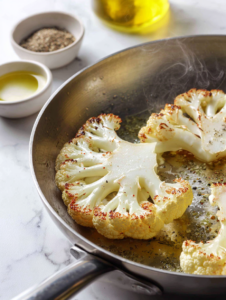
- Carefully place the cauliflower steaks in the hot pan, pressing down slightly for good contact. Sear for 4-5 minutes until the bottoms are deeply golden and charred, emitting a smoky aroma.
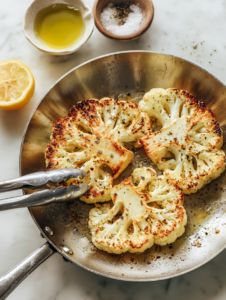
- Using tongs or a spatula, gently flip each steak and cook for another 4-5 minutes on the second side until similarly caramelized and tender when tested with a fork.
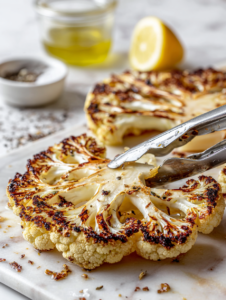
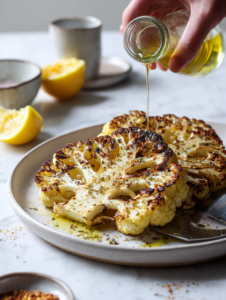
- Once both sides are nicely browned and fragrant, remove the steaks from the pan and transfer to a serving plate. Drizzle with fresh lemon juice to brighten the smoky flavors.
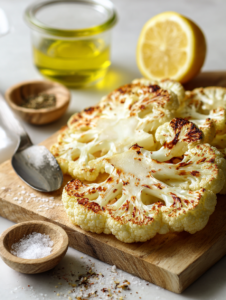
- Let the cauliflower rest for a minute or two, then serve hot, garnished with extra herbs or a sprinkle of sea salt if desired.
Tips & Tricks for Perfect Cauliflower Steaks
- Bolded mini-head: Use a hot pan and let it shimmer—this ensures a good sear and prevents sticking.
- Bolded mini-head: Don’t overcrowd the pan—work in batches if needed, to achieve crispy, caramelized edges.
- Bolded mini-head: Flip the steaks only once they release easily from the pan—resistance means they’re not ready to turn.
- Bolded mini-head: For extra smoky flavor, add a pinch of smoked paprika to the seasoning before cooking.
- Bolded mini-head: If cauliflower sticks or tears, gently loosen with a spatula and cook longer on the first side.
- Bolded mini-head: Finish with a squeeze of lemon immediately after removing from heat—brightens the smoky, caramelized notes.
- Bolded mini-head: For an even char, press down gently with a spatula during the last minute of cooking—be careful not to mash the steaks.
Common Cauliflower Steak Mistakes & How to Fix Them
- FORGOT to check cauliflower thickness—aim for even, 1-inch slices for uniform cooking.
- DUMPED too much oil—use just enough to lightly coat steaks, avoid soggy texture.
- OVER-TORCHED the edges—reduce heat or cook in batches to prevent burning.
- MISSED resting time—allow cauliflower to rest 2 minutes for better flavor and easier serving.
Unique Fixes: Quick Solutions for Cauliflower Steaks
- If/When cauliflower steaks stick, splash a little water to loosen and prevent tearing.
- When cauliflower burns too quickly, patch with a quick sprinkle of oil and lower heat.
- Splash lemon juice when steaks are almost done to brighten smoky flavors instantly.
- DUMPED too much oil? Rescue with a paper towel to blot excess and crisp edges further.
- When pantry lacks fresh herbs, swap with dried ones or a pinch of smoked paprika for depth.
Making Cauliflower Steaks Ahead and Storage Tips
- You can slice the cauliflower into steaks a day in advance; keep them covered in the fridge to prevent drying out, which helps maintain their freshness and prevents discoloration.
- Store the pre-seasoned steaks in an airtight container, and they’ll stay good for up to 24 hours—expect the spices to meld and deepen in flavor overnight.
- Refrigerated cauliflower steaks will develop a slightly firmer texture; to reheat, warm them in a hot skillet for 2-3 minutes per side until crispy and fragrant, with a smoky aroma returning.
- Avoid freezing raw cauliflower steaks, as moisture loss can make them mushy upon reheating; if you must freeze, do so immediately after slicing and use within 1 month, then thaw thoroughly before reheating.
Frequently Asked Questions about Cauliflower Steaks
1. How thick should cauliflower steaks be?
Slice the cauliflower into 1-inch thick slabs to ensure even cooking and a good sear. Use a sharp knife for clean cuts.
2. How long do I cook cauliflower steaks?
Preheat your pan or grill until hot and shimmering. Cook the steaks for about 4-5 minutes per side until deeply caramelized and tender.
3. How do I know when cauliflower steaks are done?
Look for a deep golden-brown color and crispy edges. The cauliflower should be tender when pierced with a knife but not falling apart.
4. What’s the best oil for cauliflower steaks?
Use a high-quality extra virgin olive oil for a smoky, rich flavor. For a lighter taste, avocado oil works well, but it won’t develop the same depth.
5. Can I make cauliflower steaks in advance?
Yes, you can prepare the slices a day ahead, cover tightly, and refrigerate. Season just before cooking for best results.
6. What if the cauliflower steaks stick to the pan?
If they stick, loosen with a spatula and cook a little longer on the first side. Avoid flipping too early to prevent tearing.
7. How do I get a good sear on cauliflower steaks?
Use a hot pan, don’t overcrowd, and flip only once the edges release easily. Press down slightly for an even sear.
8. How should I store and reheat cauliflower steaks?
You can store cooked steaks in the fridge for up to 2 days. Reheat in a hot skillet until crispy and fragrant, about 2-3 minutes each side.
9. What do I do if the cauliflower burns?
When cauliflower burns, lower the heat or add a splash of water to cool the pan. Quickly scrape up the browned bits and adjust heat.
10. Any tips for slicing cauliflower evenly?
Use a sharp knife, keep the slices even, and don’t rush the searing process. Patience with the heat creates that smoky, caramelized crust.
Cauliflower steaks might seem like a simple idea, but their smoky char and tender interior make them feel surprisingly indulgent. Watching them sizzle and turn golden brown on the pan is a reminder that good food often comes from straightforward techniques and a little patience.
In a season where veggie dishes are expected to be boring or basic, these steaks break that mold. They’re a no-fuss, high-flavor way to elevate a humble vegetable into something worth savoring, whether for a quick weeknight dinner or a weekend gathering.