This creamy vegan tomato pasta is a bit of a kitchen experiment that turned into a weekly comfort. I was tired of relying on nuts or soy-based creams to get that lush, velvety sauce everyone seems to chase. Turns out, a few humble vegetables and pantry staples can do the trick, and the result is surprisingly rich without any processed ingredients.
What I love most is how adaptable this dish is—no fancy ingredients needed, just everyday stuff that’s probably already sitting in your fridge or cupboard. It’s a reminder that you don’t need complicated or expensive to get a dish that feels indulgent and satisfying. Plus, the smell of simmering tomatoes and garlic fills the kitchen with a warm, inviting scent that makes dinner feel like a small celebration.
Focusing on the surprisingly rich creaminess achievable without any nuts or soy, just everyday vegetables and pantry staples.
Unexpected Creaminess from Vegetables
- This dish surprised me with how comforting it feels, like a warm hug in a bowl, without any dairy.
- I love how the tomato sauce becomes silky and rich, even though it’s all vegetables and pantry staples.
- Cooking this makes my kitchen smell like childhood—roasted garlic and sweet simmered tomatoes—pure nostalgia.
- There’s a small victory in turning simple ingredients into something so indulgent, it’s almost hard to believe it’s vegan.
- Sharing this with friends always sparks surprise — they can’t believe how creamy and satisfying it is without cheese or cream.
Unexpected Creaminess from Vegetables
This recipe was born out of a lazy Sunday experiment in my cramped kitchen. I had a bunch of ripe tomatoes and a craving for something creamy without all the usual dairy or nuts. The idea of blending cooked vegetables into a velvety sauce came from those moments when you want comfort but also want to keep things simple and real. It’s become a go-to for busy nights, proving that even humble ingredients can surprise you with richness and depth. Every time I make it, I think about how a little creativity in the kitchen can turn everyday ingredients into something unexpectedly special.
Historical Roots of Vegetable-Based Creaminess
- This dish evolved from a desire to mimic the creamy texture of traditional Alfredo without any dairy, using only vegetables and pantry staples.
- It draws inspiration from rustic Italian sauces that use pureed tomatoes and cooked vegetables to achieve richness naturally.
- The technique of blending cooked vegetables into sauces dates back centuries as a way to add creaminess without dairy, especially in resource-limited kitchens.
- Modern plant-based cooking often rediscovered these old methods, turning humble ingredients into luxurious textures without processed creams.
Ingredient breakdown
- Tomatoes: Ripe, juicy tomatoes give that bright, slightly sweet flavor and a vibrant color. If your tomatoes are meh, roast them first for extra depth.
- Cashew or Cauliflower Base: I blend cooked cashews or cauliflower until smooth—this creates that luscious, velvety texture. Swap with silken tofu if nuts aren’t your thing, but the creaminess shifts a bit.
- Garlic: Fresh garlic is a must for that fragrant, pungent punch. I prefer smashing it for a more intense aroma, but minced works too if you want a subtler background.
- Olive Oil: Use good-quality extra virgin for richness and depth. A splash at the start helps bloom the garlic, and a drizzle at the end brightens everything up.
- Basil & Seasonings: Fresh basil adds a sweet, peppery note — toss it in at the end for that fresh, fragrant burst. Dried herbs can work, but they lack that lively brightness.
- Lemon or Vinegar: A squeeze of lemon or splash of vinegar lifts the sauce with a zesty brightness. Don’t skip it for that clean finish, especially if the tomatoes are on the mellow side.
- Pasta: Go for a sturdy, al dente spaghetti or penne. Save some pasta water—it’s your secret weapon for adjusting creaminess and binding everything together.
Spotlight on key ingredients
Tomatoes:
- Ripe, juicy, and slightly sweet, they form the vibrant base of the sauce. If your tomatoes are bland, roasting intensifies their flavor and adds a smoky undertone.
- Cashews or Cauliflower: When blended, they create that luscious, velvety texture. Cashews bring a richer, nuttier taste, while cauliflower offers a lighter, more neutral creaminess. Watch them turn smooth and glossy—avoid over-blending to prevent a grainy texture.
Garlic:
- Fresh garlic provides a pungent, fragrant punch that wakes up the dish. It crackles and releases a sweet aroma as it cooks, transforming into a golden hue when perfectly toasted. Overcooking garlic turns bitter—so keep an eye on it.
- ingredient
Notes for ingredient swaps
- Dairy-Free: Coconut milk or cashew cream can replace traditional cream, adding richness but slightly changing the flavor profile.
- Tomatoes: Use canned diced tomatoes or roasted red peppers for a different sweetness and smoky depth.
- Pasta: Whole wheat or gluten-free pasta work well; they might need a slightly longer cooking time or altered water amount.
- Garlic: Roasted garlic offers a sweeter, milder flavor if fresh is too pungent for your taste.
- Olive Oil: Avocado oil can be a neutral alternative, though it lacks some of that grassy aroma.
- Herbs: Fresh thyme or oregano can substitute basil for a different aromatic punch, especially in winter.
- Vinegar or Lemon: Apple cider vinegar or lime juice can brighten the sauce with a different citrus note or tang.
Equipment & Tools
- Large pot: Boil pasta efficiently and evenly.
- Blender: Puree cooked vegetables into a smooth, creamy sauce base.
- Sauté pan: Cook and simmer the tomato sauce.
- Wooden spoon: Stir ingredients gently without scratching pans.
- Measuring cups and spoons: Accurately measure liquids and seasonings.
Step-by-step guide to Creamy Vegan Tomato Pasta
- Gather your tools: a large pot for pasta, a blender for sauces, a sauté pan, and a wooden spoon. Fill the pot with salted water, about 4 liters, and bring to a rolling boil at 100°C (212°F).
- Start the sauce: in the sauté pan, heat 2 tablespoons of olive oil over medium heat (around 160°C/320°F). Add 4 minced garlic cloves, cook until fragrant, about 30 seconds; do not brown. Add 4 cups chopped ripe tomatoes, cook until they soften and release juice, about 10 minutes. Stir occasionally, smashing tomatoes with the back of a spoon.
- While the sauce simmers, cook your pasta: add 400g (14 oz) spaghetti or penne to boiling water. Cook until just al dente, about 8-10 minutes, following package instructions. Reserve 1 cup pasta water before draining.
- Prepare the creamy base: in a blender, combine 1 cup cooked cauliflower or cashews, 1 cup cooked carrots (for sweetness), and 1/2 cup vegetable broth or water. Blend until smooth and velvety, about 1 minute. Season with a pinch of salt and pepper to taste.
- Finish the sauce: add the blended vegetable mixture to the tomato sauce. Stir well to incorporate. Simmer on low heat for 5 minutes, stirring frequently; sauce should thicken slightly and become glossy. If too thick, loosen with reserved pasta water, a tablespoon at a time.
- Combine pasta and sauce: add drained pasta to the sauce in the sauté pan. Toss gently over medium heat (around 160°C/320°F) for 1-2 minutes, allowing flavors to meld. Taste and adjust seasoning—more salt, a squeeze of lemon, or a dash of chili flakes if desired.
- Final touches: turn off heat. Toss in freshly chopped basil, drizzle with a little olive oil, and serve immediately. Garnish with extra basil or nutritional yeast for a cheesy effect if you like.
Let the pasta sit briefly off heat for 1-2 minutes to settle. Serve immediately, with a drizzle of olive oil and fresh herbs for brightness.
How to Know It’s Done
- Tomatoes should be soft, fragrant, and slightly caramelized around edges.
- Sauce should be silky, thick enough to coat pasta without pooling excessively.
- Pasta should be al dente, with a slight bite, and well coated with sauce.
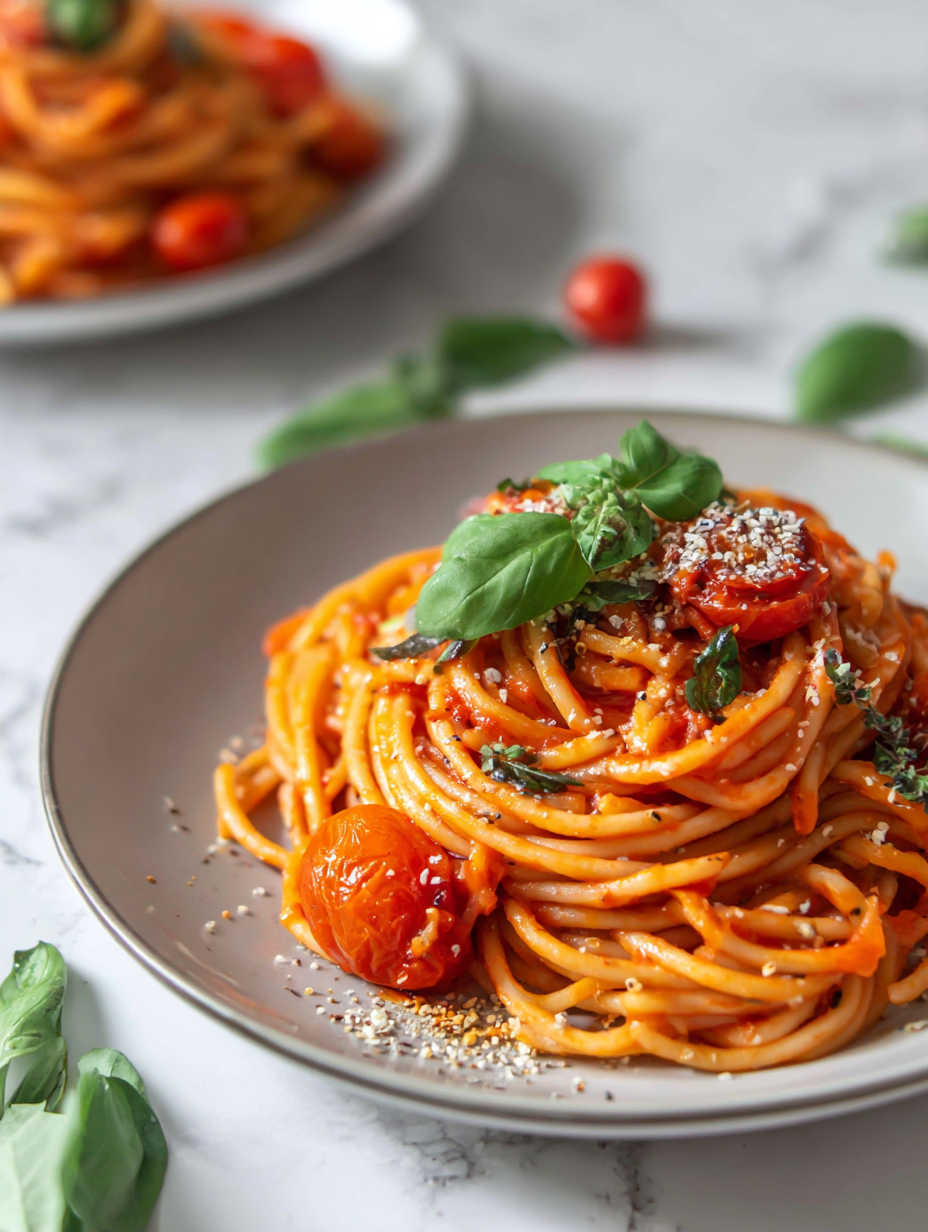
Creamy Vegan Tomato Pasta
Ingredients
Equipment
Method
- Start by heating 2 tablespoons of olive oil in a sauté pan over medium heat until it shimmers and fills your kitchen with a fragrant aroma.
- Add the minced garlic to the pan, cooking for about 30 seconds until it becomes fragrant and slightly golden, but not browned.
- Stir in the chopped ripe tomatoes and cook for 10 minutes, smashing them gently with the back of a spoon as they soften and release their juices, filling the pan with a bubbling, fragrant sauce.
- While the sauce simmers, cook your pasta in a large pot of salted boiling water until just al dente, about 8-10 minutes. Drain, reserving a cup of pasta water for later.
- In a blender, combine the cooked cauliflower or cashews, cooked carrots, and vegetable broth. Blend until smooth and creamy, about 1 minute, then season with a pinch of salt and pepper.
- Pour the blended vegetable mixture into the simmering tomato sauce, stirring well to incorporate, and cook for another 5 minutes until the sauce is glossy and slightly thickened.
- Add the cooked pasta to the sauce, tossing gently to coat all the noodles evenly. If the sauce is too thick, loosen it with a splash of the reserved pasta water.
- Squeeze fresh lemon juice over the pasta and stir in chopped basil for a burst of brightness and fresh aroma.
- Taste the pasta and adjust seasoning with more salt, pepper, or lemon as needed. Serve immediately, garnished with extra basil and a drizzle of olive oil if desired.
Notes
Pro tips for perfect creaminess
- Bolded Mini-Head: Sauté garlic until fragrant but not browned. The aroma should be sweet and pungent, filling your kitchen with warmth.
- Bolded Mini-Head: Use ripe, juicy tomatoes for vibrant flavor. If they’re meh, roast them first to deepen sweetness and add smoky notes.
- Bolded Mini-Head: Blend cooked vegetables until silky. Watch for a glossy, smooth texture—over-blending can make it grainy.
- Bolded Mini-Head: Save pasta water before draining. It’s your secret weapon to loosen the sauce and help it cling better.
- Bolded Mini-Head: Taste and adjust seasoning at the end. A squeeze of lemon brightens the whole dish, balancing acidity and richness.
Common mistakes and how to fix them
- FORGOT to stir sauce? Use a splash of pasta water to loosen and bring together.
- DUMPED in all ingredients at once? Add components gradually for better texture and flavor.
- OVER-TORCHED the garlic? Rescue with a squeeze of lemon and quick stir to salvage flavor.
- USED the wrong type of pasta? Stick to sturdy shapes like penne or spaghetti for best coating.
Quick fixes and pantry swaps
- When sauce is too thin, splash in a bit more blended cauliflower and simmer until thickened.
- If pasta clumps, rinse quickly with hot water and toss with a splash of olive oil before serving.
- Splash lemon juice when sauce seems dull; it brightens flavor instantly.
- Patch burnt garlic by removing it immediately and adding a fresh clove or two at the end.
- Shield the sauce from overcooking by lowering heat if you notice bubbling too vigorously.
Prep, store, and reheat tips
- Prep your sauce ingredients: chop tomatoes and garlic up to a day in advance; store in airtight containers in the fridge for up to 24 hours, preserving their fresh aroma.
- Cook the pasta ahead: drain and toss with a little olive oil, then refrigerate for up to 1 day. Reheat in boiling water for 30 seconds to retain al dente texture.
- Make the creamy vegetable base: blend cooked cauliflower or cashews and carrots ahead of time. Keep in an airtight jar in the fridge for up to 2 days; stir well before use.
- Reheating the sauce: warm gently in a pan over low heat, adding a splash of water or reserved pasta water. Expect a slightly thicker, richer aroma, with the flavors intensifying after a quick reheat.
- Shelf life: the assembled sauce keeps well for up to 2 days in the fridge, but the texture may change slightly—reheat gently and adjust with a bit of liquid for best consistency.
Top questions about vegan tomato pasta
1. Can I use canned tomatoes instead of fresh?
Use ripe tomatoes for a naturally sweet, vibrant base. If your tomatoes are bland, roast them first for extra flavor.
2. What’s the best substitute for nuts or soy in the sauce?
Blended cooked cauliflower or cashews create that silky, creamy texture. If nuts aren’t your thing, silken tofu can work, but it’s less rich.
3. How do I get the sauce to stick to the pasta better?
Cook pasta until just al dente, about 8-10 minutes. Save some pasta water to loosen the sauce if needed.
4. Should I add acid to the sauce?
Add lemon juice or vinegar at the end to brighten the flavors. It cuts through the richness and gives a fresh finish.
5. Can I skip the olive oil?
Use good-quality olive oil for depth. Drizzle a little at the end for a glossy finish and extra flavor.
6. How do I reheat the pasta without it drying out?
Reheat gently on low heat, stirring often. Add a splash of water or reserved pasta water to maintain creaminess.
7. How do I fix a bland sauce?
Adjust seasonings at the end, especially salt and lemon. Taste and tweak until the flavor feels lively and balanced.
8. Can I use dried herbs instead of fresh?
Use fresh basil or other herbs right before serving to keep their bright aroma and flavor alive.
9. How do I prevent garlic from burning?
Overcooking garlic leads to bitterness. Cook just until fragrant, about 30 seconds, and then add tomatoes.
10. Can I make this ahead of time?
This dish is great for batch prep. Keep the sauce in the fridge for up to 2 days and reheat gently for best flavor and texture.
This pasta isn’t just a quick dinner; it feels like a small act of kitchen rebellion—rich, velvety, and completely plant-based. It’s perfect for when you want comfort without compromise, especially in these busy, unpredictable days.
Sharing this dish always reminds me that simple ingredients, cooked with a bit of care, can still surprise and satisfy. It’s a reminder to trust the humble and keep experimenting, even with the most familiar staples.