Sometimes, I find myself craving a dish that’s more than just fuel. Something that whispers stories of distant markets and slow afternoons. This chickpea vegetable tagine isn’t just a recipe—it’s a little journey into a pot, where earthy spices and tender vegetables mingle in quiet harmony.
I started making it on chilly weekends when I needed comfort that also sparked a bit of adventure. The aroma of cumin and cinnamon fills the kitchen like a secret handshake. It’s honest, unpretentious, and perfect for those evenings when you want something nourishing but not complicated.
What I love most is how flexible it is. A splash of lemon brightens the whole thing, and a handful of olives adds a salty punch. Each time I make it, I feel like I’m rediscovering an old recipe through new eyes—simple, soulful, and just right for this season.
The Diary Scribble: Why I Keep Coming Back to This Tagine
- It reminds me of lazy Sundays at my grandma’s house, where the smell of spices was always in the air.
- Joy blooms when I see the vibrant colors simmering together—like an edible painting.
- There’s relief in knowing I can throw this together with pantry staples, no fuss required.
- I feel proud every time I serve it and watch people’s faces light up at the first bite.
- Nostalgia hits me with each spoonful, like a warm, familiar hug from the past.
The Ingredient Chronicles: What’s in This Pot of Wonders?
- Chickpeas: I use canned for convenience, but dried work too. They stay firm and hold their shape, absorbing all those spices.
- Carrots: I prefer organic, sliced thick. They add a subtle sweetness and a pop of color—think orange fireworks in the stew.
- Tomatoes: Juicy, ripe, and a little oozy when simmered—look for vine-ripened for the best flavor.
- Onions & garlic: The aromatic backbone. Caramelized onions give depth; garlic adds a smoky edge.
- Spices: Cumin, cinnamon, smoked paprika—ground to release their warm, smoky, lemon-bright scents that make the kitchen sing.
- Olives & preserved lemon: For a salty, tangy contrast—think of them as flavor punctuation marks.
- Vegetable broth: Use homemade if you have it, or a good-quality store-bought version for richness and clarity.
The Kitchen Map: Navigating the Tagine Terrain
Equipment & Tools
- Heavy-bottomed pot or traditional tagine: To evenly distribute heat and develop flavors.
- Sharp knife & cutting board: For prepping vegetables with ease.
- Measuring spoons & cups: To keep spice levels just right.
- Wooden spoon: For gentle stirring without scratching the pot.
Mise en Place
- Drain and rinse chickpeas, set aside.
- Slice carrots and chop onions, garlic.
- Dice tomatoes, chop herbs if using fresh.
- Measure out spices and broth.
- Prep olives and preserved lemon for finishing.
Steps
- Heat the pot over medium, add oil, and sauté onions until translucent, about 5 minutes.
- Add garlic and spices; cook until fragrant, about 1 minute—smell that smoky warmth.
- Stir in carrots and tomatoes; cook until they start breaking down, about 10 minutes.
- Add chickpeas and broth; bring to a gentle simmer.
- Lower heat, cover, and cook for 25-30 minutes. Stir occasionally, check for a thick, saucy consistency.
- Adjust seasoning, add olives and preserved lemon near the end—just enough time for their flavors to meld.
- Let sit off heat for 5 minutes before serving. The aroma should be inviting, with a hint of citrus and spice.
Resting & Finishing
Let the stew rest uncovered for 10 minutes. Serve with crusty bread or over couscous, spooning the sauce generously.
Checkpoints & How to Know It’s Done
- Chickpeas are tender but firm—test with a fork.
- Vegetables are soft but not mushy—stab a piece for texture.
- The sauce thickens slightly and smells deeply spiced with a citrusy tang.
Oops Moments & How to Bounce Back
- FORGOT to add salt? Sprinkle in a little sea salt or soy sauce at the end.
- DUMPED too much liquid? Uncover and simmer on high until it reduces.
- OVER-TORCHED spices? Add a splash of water or broth to mellow the bitterness.
- SPILLED tomato juice? Use a paper towel to clean, then continue—don’t stress.
Quick Fixes for Kitchen Quirks
- When sauce is too thick, splash in warm water or broth, stir gently, and simmer briefly.
- Splash lemon juice for brightness or a pinch of sugar to balance acidity.
- Patch blandness with a pinch more salt or a drizzle of honey.
- Shield overcooked vegetables with a lid and simmer gently.
- When in doubt, add a pinch of smoked paprika for depth and shimmer.
This dish isn’t just a meal; it’s a small act of kindness you make yourself. Sometimes, all it takes is a pot of stew to ground you again, especially when seasons change and hearts feel a little unsettled. It’s honest food—simple, soulful, and quietly powerful.
So, whether you’re cooking for yourself or sharing with friends, this tagine is a reminder that good things often come from humble ingredients and a little patience. Keep it on hand for those nights when you need something warm and real—no fuss, just flavor.
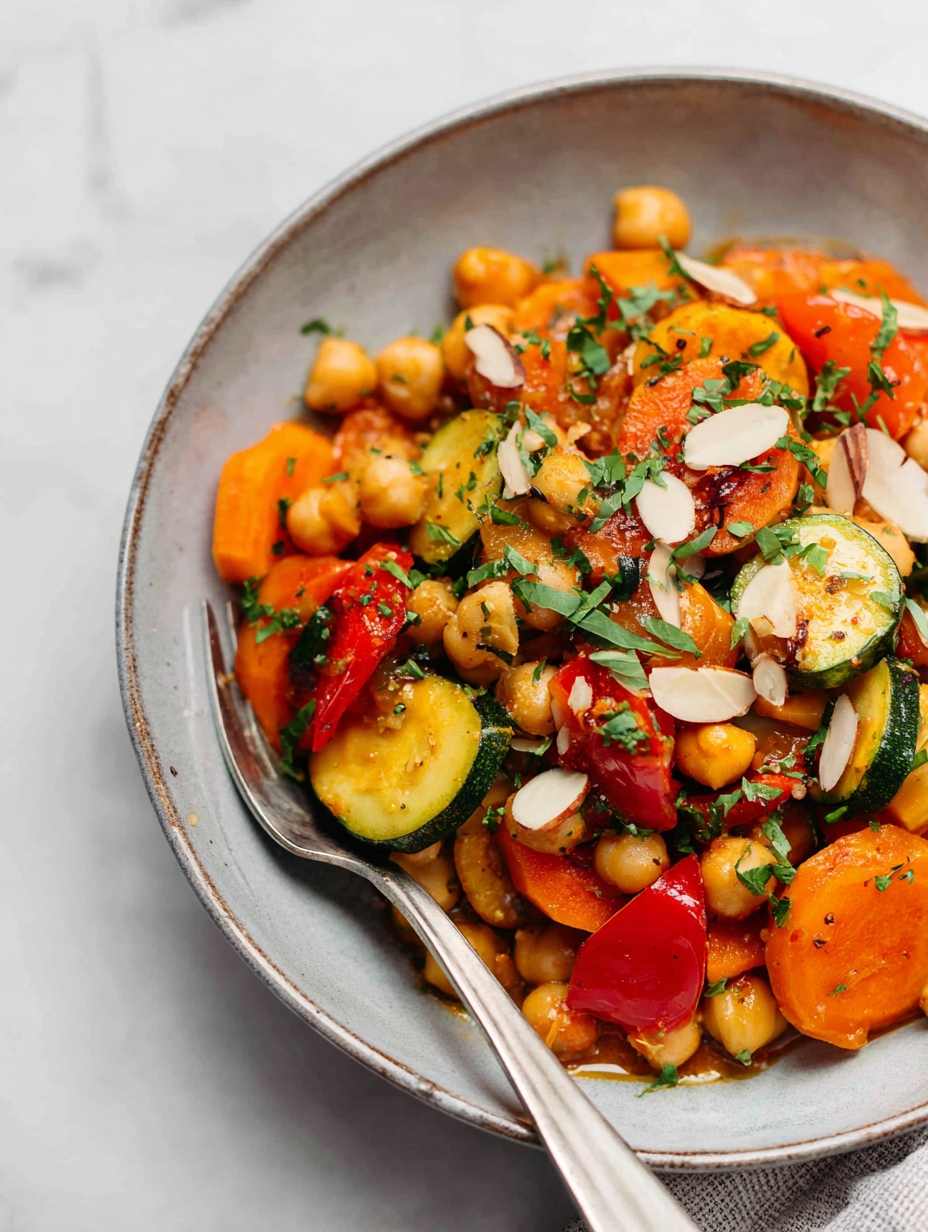
Chickpea Vegetable Tagine
Ingredients
Equipment
Method
- Heat your heavy-bottomed pot over medium heat and add olive oil, listening for a gentle sizzle.
- Add chopped onions to the pot and sauté until they become translucent and soft, about 5 minutes, filling the kitchen with a sweet aroma.
- Stir in minced garlic along with cumin, cinnamon, and smoked paprika, cooking for about 1 minute until fragrant and warm, filling the air with smoky, lemony scents.
- Add the sliced carrots and diced tomatoes to the pot, stirring to coat them with the spices, then cook for 10 minutes until the tomatoes break down and the mixture thickens slightly.
- Pour in the drained chickpeas and vegetable broth, stirring gently to combine everything evenly, then bring the mixture to a gentle simmer.
- Lower the heat, cover the pot, and let everything cook gently for about 25-30 minutes, stirring occasionally and watching for a thick, saucy consistency that coats the vegetables.
- Near the end of cooking, stir in sliced olives and chopped preserved lemon, allowing their flavors to meld into the sauce for about 5 minutes.
- Remove the pot from heat and let the stew rest uncovered for 10 minutes, allowing flavors to deepen and the sauce to thicken slightly.
- Scoop the warm chickpea vegetable tagine into bowls, spooning generous amounts of sauce over the tender vegetables and chickpeas.
Notes
As the last spoonfuls disappear, I find myself already thinking about the next batch. This isn’t just about comfort, but about rediscovering the joy in everyday cooking—making something that feels like a small celebration of simple things. No matter how chaotic the day, a pot of chickpea vegetable tagine can bring a quiet moment of peace.
Maybe it’s the way the spices linger in the air or the vibrant colors that make a dull day brighter. Whatever it is, I keep coming back to this recipe, season after season. It’s not fancy, but it’s honest—just like the good stuff in life should be.